
Red Light Therapy – The Antidote to “Junk Light”
Inspired by insights from the Huberman Lab Podcast featuring Dr. Andrew Huberman and Dr. Glen Jeffery, Professor of Neuroscience at University College London.
We often view light simply as a tool for vision. However, a recent podcast with Dr. Andrew Huberman (Huberman Lab) and Dr. Glen Jeffery (Professor of Neuroscience at University College London) highlights a more profound reality: specific wavelengths of light act as a fundamental fuel source for balancing our physiology.
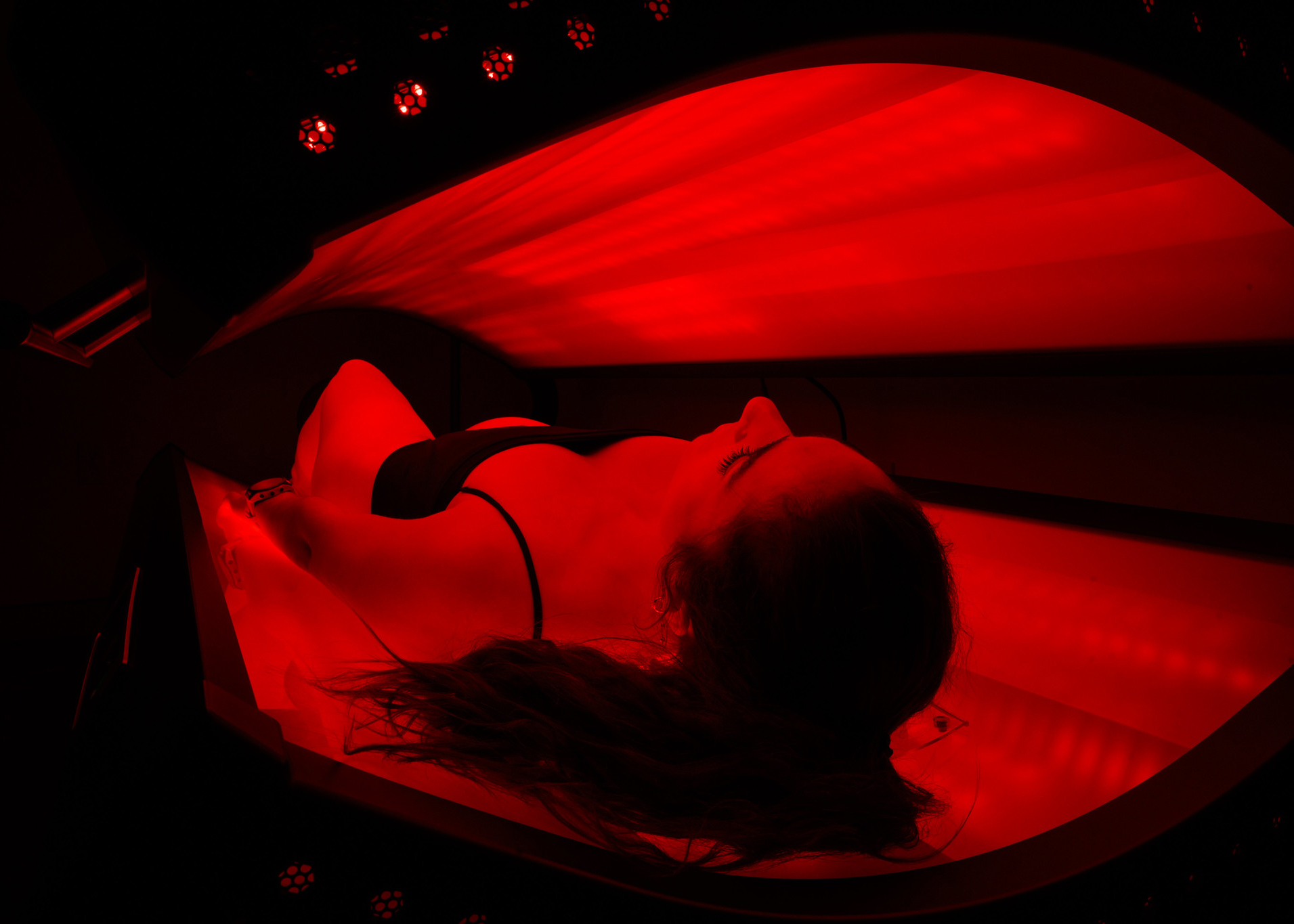
At Zenergy, we utilize the power of long-wavelength light (red and near-infrared) to repair and recharge your body at the cellular level, with regular sessions activating the essential mitochondria and upgrading the cell’s energy capacity over time.
The Antidote to “Junk Light”
Dr. Huberman and Dr. Jeffery argue that modern humans are suffering from a specific form of “light malnutrition.” We spend our days bathed in the light of standard LEDs—from overhead fixtures to digital screens.
The Problem: Standard LED lighting provides a high dose of short-wavelength blue light while lacking balancing long wavelengths. Dr. Jeffery explains that this isolated blue light can be stressful to our biology, causing mitochondria to become sluggish, potentially accelerating cellular aging.
The Solution: Red Light Therapy serves as a biological counterbalance. Dr. Jeffery emphasizes that our cells evolved under the sun, which provides a full spectrum including blue, red, and infrared light. Zenergy’s red light therapy acts as a correction to our indoor environment. By flooding the body with the restorative long wavelengths missing from modern lighting, we can offset the metabolic strain caused by artificial LED exposure.
Other Health Benefits
The benefits of long-wavelength light do not stop at the surface. Unlike UV light, red and near-infrared wavelengths penetrate deep into the body, scattering through tissue to reach internal organs.
Dr. Jeffery’s research highlights several systemic effects of this deep penetration:
- Metabolic Regulation: Dr. Jeffery cites studies showing that red light exposure can improve glucose disposal, helping to moderate blood sugar spikes.
- Cellular Protection: Regular exposure is linked to a reduction in the rate of apoptosis (cell death), preserving tissue health and function.
- Deep Tissue Reach: The light passes through skin and bone, supporting mitochondrial function in deep muscle tissue and internal organs.
Systemic Benefits: Beyond the Skin
A key insight from Dr. Jeffery’s lab is that long-wavelength light does not stop at the surface. Unlike UV light, Red and Near-Infrared wavelengths penetrate deep into the body, scattering through tissue to reach internal organs.
Dr. Jeffery’s research highlights several systemic effects of this deep penetration:
- Metabolic Regulation: Dr. Jeffery cites studies showing that red light exposure can improve glucose disposal, helping to moderate blood sugar spikes.
- Cellular Protection: Regular exposure is linked to a reduction in the rate of apoptosis (cell death), preserving tissue health and function.
- Deep Tissue Reach: The light passes through skin and bone, supporting mitochondrial function in deep muscle tissue and internal organs.

The Protocol: Consistency is Key
According to Dr. Jeffery, red light therapy operates like a biological “switch.” Once the mitochondrial mechanisms are activated, the repair processes remain active for days.
Subsequently, Drs. Huberman and Jeffery agree that you do not need daily exposure to see results. However, consistency is vital. A routine of a few sessions per week at Zenergy is sufficient to keep your mitochondria functioning optimally and to maintain a balanced “light diet” in an LED-dominated world.
To dive deeper into this topic, listen to the full conversation with Dr. Andrew Huberman and Dr. Glen Jeffery on the Huberman Lab Podcast.
 and select “Create account”. Then, enter the same email associated with your Zenergy Member account and follow the instructions to complete registration. If you experience any difficulties, please email